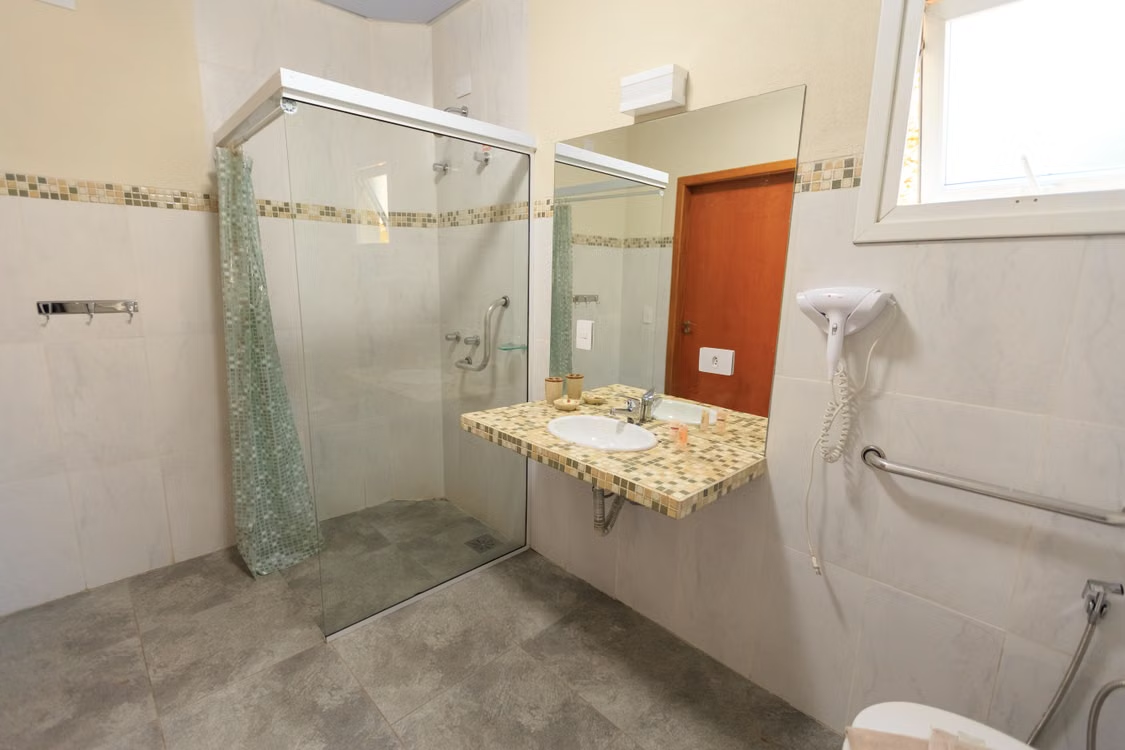
A home adaptation begins with understanding how a space is used. Before choosing a product or alteration, describe what you want to make easier and the circumstances in which the difficulty occurs.
Focus on the task
Write down the location, time, and activity involved. For example, describe the route between rooms or the steps in an everyday household task. Include the experience of anyone else who uses the space.
This record is preparation for a conversation, not a diagnosis or safety assessment. Specific accessibility and health needs should be discussed with appropriately qualified professionals.
Ask about options and tradeoffs
A proposed change may affect other tasks, maintenance, or the use of the room. Ask why an option is suggested, how suitability will be checked, and whether a different approach might meet the same need.
For building work, clarify applicable permissions, professional responsibilities, costs, disruption, and written scope. Obtain current information rather than assuming a general online example will fit your home.
Keep questions together
- What outcome is the change intended to achieve?
- Who will assess suitability?
- What work and follow-up are included?
- How will other household members use the space?
Avoid purchasing equipment simply because it is marketed for older adults. A broad label does not establish suitability for a particular person.
Your next step is to describe one difficult task in plain language and identify the right professional to discuss it with. A clear problem description can make that appointment more productive.